Aunt Victoria walked into view of the sliding patio doors across the living room. It was dark outside and she looked otherworldly and glowing in a pale white dress. I had never seen her before, but I knew it was her because she looked exactly as I had imagined. I had been watching television with my grandma who dozed between a book and the news, mumbling in Spanish. I sat on the ground, on a rug of many colors.
“What are you looking at?” My grandma asked, grumpily.
“Is that Auntie Victoria?” I pointed out the window, my twelve year old voice squeaked in high notes compared to the President who rumbled a speech on the television.
Grandma slammed her book down and lifted herself up from her recliner. She tightened her maroon robe around her waist and stomped toward the sliding glass doors. She had taken her brown wig off earlier that evening, her silver hair matted to her head.
I stood up from the rug, but grandma held out a stern finger behind her and I slunk back down, still trying to peek around her to see Victoria standing in the grass of the backyard.
Grandma slid open the door and shouted, “And what are you doing out there?”
I heard Victoria’s voice like a flute, but her words were lost from the television sounds.
“You’re scaring your nephew,” Grandma hissed.
“I’m not scared.” I whined, but she ignored me.
“Get back to your room,” Grandma continued, “You’re not well.”
I crawled quietly over the large rug and attempted to peek past Grandma’s frame to the outside, but Aunt Victoria was gone. I heard her enter through the side door of the house and soon she was in the foyer, walking up the set of stairs. I saw her silhouette, dark in front of a covered window. I knew she watched me for a moment before continuing up to her room where she stayed confined and hidden from me.
“Alejandro,” Grandma tersed, “Go to bed.”
I knew better than to argue. I walked passed the kitchen and into the den with the large sofa with the deep cushions. My sheets and blankets were already set up. I fell asleep thinking about ghosts and wondering if Aunt Victoria was one.
The next day, after school, I finished my homework and glanced over a book from my grandpa’s bookshelf. He was dead now for many years. I had never met him and Grandma, set into her stoicism, was not one to speak about the past. The book was on ancient cultures of Mesoamerica. It was in Spanish, like many of my grandpa’s books, so I couldn’t read it. I flipped through it to observe the illustrations of muscled half-naked men in large headdresses with crooked daggers in their hands. I imagined the foreign words glowing and their meanings entering into me as I ran my fingers over the type.
Grandma served dinner early and gave me instructions to be in bed before she returned. I knew she wouldn’t be back until late. It was a Friday, and she went out for drinks with my great-aunts — her sisters — on Fridays. I stayed up in the living room, watching television and eating potato chips from the kitchen.
I saw Aunt Victoria again from the corner of my eye. She was outside looking into the large bird bath in the center of the backyard. I lowered the volume of the television and watched her, standing as still as a statue, wearing her white dress.
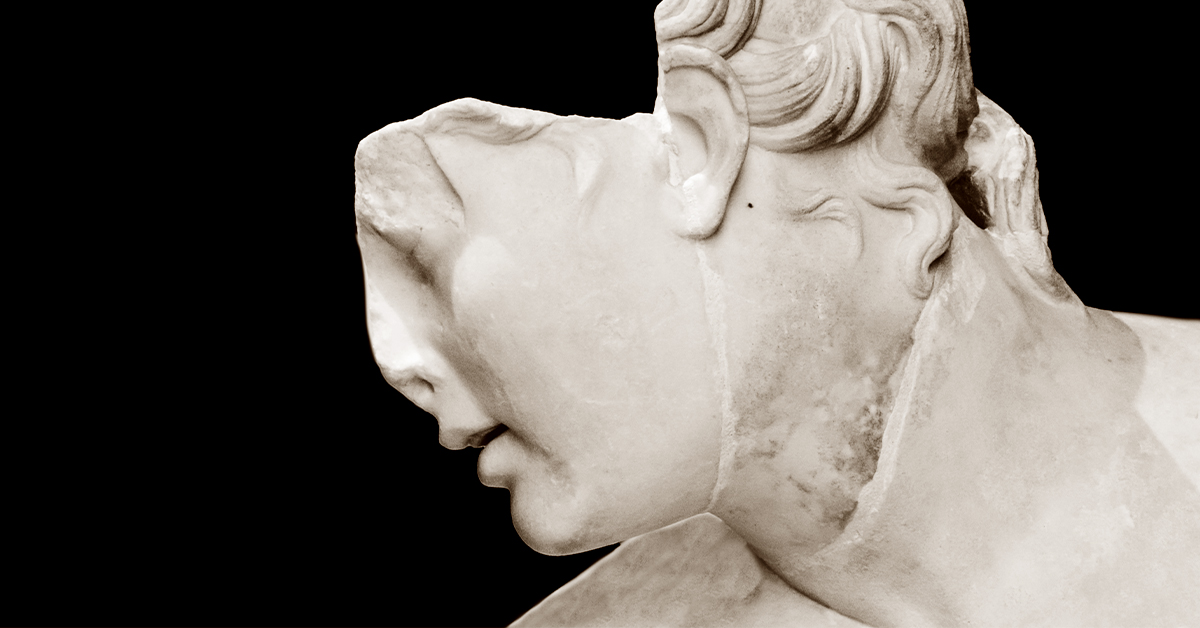
I turned off the television and stepped outside and walked toward her and she still watched into the water with only the twilight sun to show her features. She looked like she had stepped out from a painting. Her hair was dark and curled at her shoulders and into the lacy trim of her dress. The dress itself was from an ancient time, classic with woven pink and blue flowers embedded into its seams. She was barefoot in the grass. Her skin was porcelain pale and smooth. She was very young — older than me, but perhaps not old enough to be out of high school.
“Aunt Victoria?” I said.
She turned her head slowly, a smile on her face. I felt uncomfortable with her smile and it was days later that I realized that I had rarely received smiles from anyone in my family and her smile was as foreign to me as the words in Grandpa’s books.
“I’m Alejandro,” I said out of the anxious silence, then added “Pájaro.”
“Like bird,” she said, and she laughed a whimsy of bells. “Little bird.”
I felt myself blush. As my Grandma often reminded me, I was anything but little. Short, maybe, but not little. My bowling pin features and large head often got me teased in school. My last name, Pájaro, was often mutated nastily to “Pear” to reference my shape in the eyes of the other children.
“Come closer, Little Bird,” she said, and I stepped toward her. She stared at me, still smiling in the faded sunlight.
“I’m your nephew. It’s good to meet you finally.” I said, awkwardly. I wasn’t use to anyone smiling at me or staring at me so intently.
“Yes,” she said, “My sister’s son. And the son of that man.”
“My dad died when I was a baby.” I was entranced by her — her soft features and the light sounds of her voice that hummed in my ears.
“I remember him. He was very kind.”
“Grandma and my mom don’t like to talk about him,” I looked down at the grass and at her bare feet. They were thin, like her, and the nails were long, but not disturbingly so. I paused, then added, “My mom is in the hospital until she gets better.”
“We all have demons in this family,” Victoria said.
I didn’t know what she meant so I looked up at her. Her lips pursed introspectively. Her eyes returned to the water in the bird bath.
“Do I have a demon, too?” I asked.
Aunt Victoria looked surprised. She placed a hand on my shoulder — touch being another rarity for me. Her hand was surprisingly warm and strong.
“Little birds can’t have demons,” she said.
We talked some more. I had so much I wanted to ask her: about my grandpa and my father, what my mom was like when she was little, but more importantly, why Victoria, who I had never met until now, was now able to leave her bedroom after Grandma insisted that she was very sick and must stay in bed. I mentioned none of those things. Victoria seemed more interested in me: how I liked school, what my favorite subjects were, and what I wanted to be when I grew up.
“I want to be a doctor,” I said.
“Doctor Little Bird,” she responded and we both laughed in the moonlight with the stars shining reflections of my joy back to us.
I heard a car, Grandma’s car, roll onto the driveway. I checked my Casio calculator watch and realized it was late. Grandma would be furious if she saw me out of bed.
“I have to go,” I said, quickly.
“We will talk later,” Aunt Victoria said.
I smiled as I slid the door shut and tossed my small bag of potato chips into the trash. I heard the sound of keys at the front door and I switched off the lights and pattered to the den. I was under my blankets before I heard Grandma in the kitchen, setting up her tea kettle for her usual late night chamomile.
That night I had a dream my father was outside the sliding glass door and shouting something to me. He looked just like his pictures. I couldn’t hear what he was saying because the President was on television giving a speech and Grandma was raising the volume. I placed my hand on the sliding door handle, and when I looked up, my father was covered in blood. His eyes were deep obsidian black and he was still shouting at me: “fire” or “fry” or, maybe, “fly.”
I checked for Aunt Victoria the following days, sometimes even going outside and looking up at her window which was always covered and dark. A few times I considered going upstairs and knocking on her bedroom door, but I wasn’t allowed upstairs and I was terrified of Grandma.
School was the same drudge of name-calling and learning, and during my lessons I thought about Aunt Victoria and wondered why she wouldn’t come down from her tower and visit me again.
“Why does Aunt Victoria stay in her room?” I asked Grandma while she served dinner.
“What are you talking about?” She said.
“Aunt Victoria,” I insisted, but I was nervous. To talk about certain things with Grandma was in defiance of her unspoken rules.
She sighed, placing a red pot on a wooden slab on the table. It was full of albondigas — a hearty meatball stew with vegetables. It was warm into May, but Grandma loved this stew and I never questioned its appearance during summer months.
“She’s sick,” Grandma said. “And that is all that you need to know.”
“Sick like my mom?” I asked. I knew I was stepping on dangerous ground.
“Your mom is sick in the head,” Grandma snapped. “Her addiction to…,” she trailed off and shook her head. “Eat your food,” she added.
I obeyed, but not without checking the sliding glass door for a sign of a young lady in white.
I saw her again the following Friday. My Grandma had left again to be with her sisters. Aunt Victoria stood by the bird bath, but this time she was watching the sliding door as if she waited for me. She wore a different dress this time, still pale in color, but missing the small flowers I had seen her in before.
“It’s good to see you again,” she said to me as I ran out to her.
I hugged her and began to cry into her shoulder.
“What’s wrong, Little Bird?” She asked me as she patted my back.
“I missed you,” I sobbed. I wanted to tell her that she was the only one who listened to me, who made me feel like I was a person, who didn’t look at me with disgust. Those thoughts were only colors and images in my unsocialized mind, and so I only said, “I really missed you,” over and over until she pulled me away and asked me more questions.
We talked well into the night, with me rushing to my room when I heard Grandma arrive home. We never outright agreed to it, but we met every Friday night, just talking. We talked about nothing, our plans for when we grew up, our favorite colors, and about hypothetical situations, like what if the sun turned to ice.
“Maybe we would have to live under the ground,” she said. I pictured vast cities of carved stone deep in the dirt, close to the Earth’s core, and giant tunnels stretching across and over pools of magma, acting as roadways.
I never asked about her sickness. I didn’t want to know anymore.
School ended for the summer and I found waiting for Friday to become more and more difficult. Grandma filled my days with chores and forced me outside when the house was clean. I spent afternoons wandering the streets of the neighborhood, avoiding the other kids who would sometimes point and laugh, calling me “Alejandro the Pear.” I pictured them turning to stone, their faces frozen in horror as I waved my fingers and they felt their skin thicken, solidify, and crack. Of course, I would never leave them that way, but they would learn not to call me names.
The first Friday of July, I asked Aunt Victoria if she would meet me on Sunday for fireworks.
“It’ll be the 4th of July and the high school down the road will shoot fireworks high in the sky from the football field. We can see them from the backyard,” I told her. It didn’t occur to me that she already would know this, having lived in this house all her life. I added, “Grandma will be watching the fireworks with her sisters that evening at the school.”
“Do little birds like fireworks?” She asked me, nudging me slightly.
I nodded enthusiastically.
That Sunday, as I walked through the neighborhood, I plucked the stem of a white rose from a yard on the corner. The person who lived there was an angry old woman. She would have scolded me had she seen me, but I risked it for Aunt Victoria. I scratched myself on the thorns and I cut my palm with my pocket knife when I scraped the thorns off.
“How did you get that?” Grandma asked. She was unpacking groceries and I helped her put things away. My hand was wrapped in the center with white mesh fabric and medical tape I found in the medicine cabinet.
“I fell down,” I lied.
“You should be more careful,” she said.
That night, I waited for Victoria by the bird bath after Grandma left. I laid a blanket out and placed the rose between where I thought she would sit and where I was. It was very bright outside for evening time.
“It’s a full moon,” I said to her as I heard her footsteps walking toward me.
“Yes,” she said. “I think the full moon was yesterday, in the sign of Capricorn. But the energy is still strong the day after.”
I had never heard her talk about astrology before. I asked her what her thoughts were on horoscopes.
“They’re not accurate,” she told me. “But only because they don’t take your other signs into account.”
“I am a Scorpio,” I told her. “I was born on Halloween.”
“I remember that day,” she smiled.
The fireworks started and we watched them in silence. Explosions of red, gold, silver, and blue, erupted through the sky and dripped downward to darkness.
“Is this for me?” Aunt Victoria picked up the rose from the blanket.
“Yes,” I said. “It reminded me of your dress when we first met.” The words felt like cotton in my mouth and I felt myself blush.
“Oh, no. You cut yourself when you picked it,” she said suddenly.
“Yes,” I said. “I’m sorry. I should have washed the stem. Is there blood?”
“Is there blood?” she repeated absently.
I felt nervous. My heart beat thrummed in my mouth and my voice quivered.
“I have something to tell you,” I said.
“Tell me.”
“I think that I’m different,” I whispered.
“Different?” She sniffed the rose petals and then she sniffed the stem.
“I think that maybe, I like boys the way some boys like girls.”
I couldn’t lift my eyes to her. I stared at my feet, at my thick legs stretched out across the blanket. My limbs suddenly felt large and exposed.
“You like boys.” She stated, flatly.
I nodded, but I felt tears pooling in my eyes. There was no warmth in her voice and I felt the sting of imminent rejection.
Aunt Victoria stood up quickly. The hem of her dress snapped in the air. I looked up to see her face contorted with anger. She looked older. She looked like Grandma.
“I’m sorry,” I said. “I will grow out of it, I think.”
“You need to leave.” She pointed a bony finger to the house.
“Aunt Victoria, please. I didn’t mean it. It was just a joke.”
“Leave!”
“Please, I will change.”
Then, she started screaming. I had never seen a mouth open so large. Her eyes were fixed on me in what might have been terror.
“What the hell is going on here!” It was Grandma. She stood by the open sliding door. Her sisters were behind her, worried expressions on their faces.
I stumbled, “I…”
“Get inside and go to bed, now!”
I ran passed her, expecting a slap or a push, but Grandma focused heavily on Aunt Victoria who was still shrieking.
“The demon!” she screamed. “It’s the demon!”
She never appeared on Friday evenings again and my grandma stopped taking her trips to visit my great aunts.
I left on Monday, July 19th. Grandma told me my mom was out of the hospital and I needed to pack my belongings. I didn’t have much.
On the television, the President talked about a military policy called “Don’t Ask Don’t Tell.” I didn’t understand much of it except that it was disturbing to Grandma. She kept shaking her head and saying, “Repulsive, repulsive, repulsive.” I imagined her saying it about me.
My mom picked me up outside on the street. My grandma did not go outside to greet her, but locked me out when the car arrived.
“Things are going to be different now,” my mom said sweetly. She said this every time she was out of the hospital. We stopped by McDonald’s and she bought me a Happy Meal that came in a box with an “m” as its handle. The toy inside was a Hot Wheels toy car.
“You like cars, don’t you?” She said to me, with those longing and hopeful eyes of a person who was going to try so hard again. Try so hard and probably fail.
“Yes, mama,” I lied.
Our apartment was on the other side of town. It meant I would be going to my original school with the poorer kids who were somehow meaner than the kids at the school closer to Grandma’s house.
The place smelled like disinfectant and I realized that my mom had probably been out of the hospital for a couple of days, cleaning the place up for my return. My mom grabbed my bag from me and helped me unpack in my bedroom which felt strange to me despite it having a twin bed to sleep on instead of a sofa.
“Now, get ready for bed,” she said. “Tomorrow we can go to the park.”
I didn’t want to look at her, but I knew she would be hurt if I didn’t so I stared up into those welling eyes. Those eyes that didn’t look like they belonged to her because they were so sorry — sorry for every forgotten dinner or slurred word, sorry for each and every slap and for every missed pickup at school. I kept hearing Aunt Victoria’s words, “The demon,” and I wept bitterly. My mom cried too.
“It’s going to be so different. I promise.”
For a while, it was different. My mom was kind. She smiled more. She even laughed. When school started, she asked me if I needed help with any homework. I was a smart kid and my grades were at the top of the class. I thanked her, but told her I was fine. She always seemed relieved. I imagined her struggling with my math assignments or my English compositions. I pitied her, and I hated myself for it.
One day in late October that she received a phone call, but she didn’t want to talk about it. She was terrible at hiding her emotions and I knew that whatever the call was about, it was grieving her.
I think she forgot my birthday. At least, she didn’t mention it. She was gone many evenings with whatever the situation was. She never forgot to pick me up from school or check in on me, but I knew she was distracted. She sobbed at night in her room. I could hear her when I woke up to use the restroom.
The day before my birthday, she broke down and told me. Aunt Victoria was dead. Her sickness got to her. The funeral was going to be a midnight mass at the old church just outside of town. I knew nothing about funerals or their customs, but I begged to go.
“Alejandro, please,” she said, “It’s not for little boys”
“I’m not a little boy anymore, mama, please! I need to say goodbye.”
“You don’t know what you’re asking for,” she said, “the circumstances around her death….”
“Make it my birthday present, then,” I said, and I could see her eyes widen in horror. She had forgotten, but she was trying so hard. It was a mean manipulation on my part, but I needed to see Victoria one last time. I needed to tell her I was sorry.
My mother nodded her head slowly and at a quarter after 11 at night, we dressed up to go.
“What should I wear?” I asked.
My mom was dressed in a her old jeans with the paint stains on them. She had on a hooded sweatshirt I had not seen her wear before.
“Do we not need to dress up?” I asked again.
“Wear something that you can throw away later. You’ll get dirty.”
The car ride to the church was silent save for the rumble of my mom’s old car. I reminisced about Aunt Victoria, her smile and her warmth, and I wiped my nose on the sleeve of my old sweatshirt that hugged tightly at my belly. I didn’t have old pants, so I wore a pair of shorts with tears at their ends that straggled at my legs.
We parked off the street in the dark. The evening was cool and rustled with fall colored leaves. I checked my calculator watch. It was 12:02 A.M., officially my birthday and Halloween morning.
“You’re late,” Grandma snapped at the door when we walked in. She wore a torn apron over a black skirt and sweater. She scowled when she saw me. “What is he doing here?”
My mom fumbled on words, saying something about my birthday and other things I could not hear because of the music. A woman played an organ at the front of the sanctuary. I had never been in a church before, that I could remember. The stained glass windows, the marble columns, the hanging chandeliers with their chains. The seats were like benches with pockets for thick books — the “pews” I believed they were called. There were only women here, dressed in aprons and colorful mismatched clothes. I remembered then, seeing a funeral on television. Perhaps it was a commercial. Men and women dressed in black suits and dresses. Some weeping into handkerchiefs and tissues. There was none of that here. The women here were alert and the atmosphere was tense as they sat wide eyed, holding on to large wooden crosses with pointed ends.
At the front of the aisle there was a small round table covered with what looked like paper sachets, and a long knife, and a wooden mallet. I walked forward without thinking about it, leaving my grandma and my mom to argue. Some of the women noticed me, but most there were concentrating hard on the open casket that rested on a metal stand in front of the massive statue of Christ on a cross looking aesthetically crucified with his eyes rolled up to Heaven.
I realized I was wrong about the sachets. There was whole garlic on the table, still wrapped in white leaves. There was also something granular on the floor, like sand, but white. Bleached sugar? No. It was salt. It was spread in a thick circle around the raised platform.
I stepped over the salt and passed the small table. I could feel my heartbeat in my ears. What was it? Fear?
Victoria looked as beautiful dead as she did alive. Her skin held the porcelain paleness to it, but her lips were brilliant red and her hair, ebony curls at her shoulders. She wore the same dress she did when I first met her. The little flowers seemed so lively, stitched into the dress folds and hems. I touched her on her shoulder. She felt cold and hard like stone.
“Aunt Victoria,” I whispered. “I’m so so sorry for what I told you.”
“What are you doing!” A scream resounded from the foot of the aisle. Grandma looked furious. She stomped her way up from the pews and stood at the base of the platform, in front of the salt circle. “You’ll ruin everything. Get away from there!” she shouted.
I teetered on disbelief at her severity, and for the first time I was angry with her — her hot temper, her cold nature, her cruelness. Of course Aunt Victoria was sick throughout her life. Of course my mom was an addict. How could they not be with this monster as their mother?
My thoughts must have shown on my face. Grandma looked even more outraged at my insolence.
“You fat disgrace,” she seethed, “Obey me!”
I felt a chill behind me, coming from the coffin. There was a shuffling and a whisper of hot breath and teeth against my ear, “You need to fly, Little Bird.”
I tumbled away in horror as Aunt Victoria opened the bottom lid of her casket. Her eyes were wide and red, and her irises were deep coal black. Her lips were tight and pursed like she was angry. The organ stopped playing and there was a murmur from the pews — a chant. The women were chanting something in Spanish. Or, was it Latin?
Aunt Victoria hissed and inhaled and made a sound that could have been a laugh, but not one she made around me before. She was studying the crowd now as each of the women stood from their benches and raised their crosses.
I used the distraction to kick at the ground and fell off the platform. Aunt Victoria looked down at me as a I heaved myself across the floor, sliding passed the salt circle. Her teeth bared (were those fangs?) and her eyes intense with blood. She reached a hand out and pointed toward me.
“Come closer, Little Bird,” she said, and it was like the first day we met. I could feel the coolness of the grass and warmth of the May air. She had said the same thing that night and I responded by getting up from the broken salt circle and stepping back onto the platform….
I was slapped hard. Grandma pulled the collar of my sweatshirt and turned me to face her.
“You foolish disappointment!”
She raised her hand to strike again, but she never hit me. Aunt Victoria held her wrist up and with a quick twist I heard bone crack and the sickening tear of flesh. Grandma screamed. I was pulled again, this time by gentler but hurried hands. It was my mom. She pulled me back and I could see Aunt Victoria with her sharp fangs, bite into Grandma’s neck. The other women in the church chanted louder and pointed their crosses at Aunt Victoria who made a deep guttural sound as blood dripped from her lips and Grandma’s body dropped to the floor. They both disappeared among the screaming and the women and the crosses as my mom pulled me outside and slammed the door shut. I heard someone lock the door behind us.
My mother held me. She was shaking and we sunk onto the steps of the church.
“It’s going to be different now, Alejandro,” she said. “I promise you.”
I sobbed heavily into her sweatshirt as the sounds of screams and the creaks of pews tore at the night.
Leave a Reply